Is rice bad for weight loss?
Cutting out rice is one of the first things many Indians try when they want to lose weight. It often works for a few weeks, for reasons that have little to do with rice itself.

No. Rice does not cause fat gain on its own. Fat loss depends on your overall calorie balance, and trials comparing very different diets found that how well people stuck to a diet predicted weight loss far more than which diet it was.
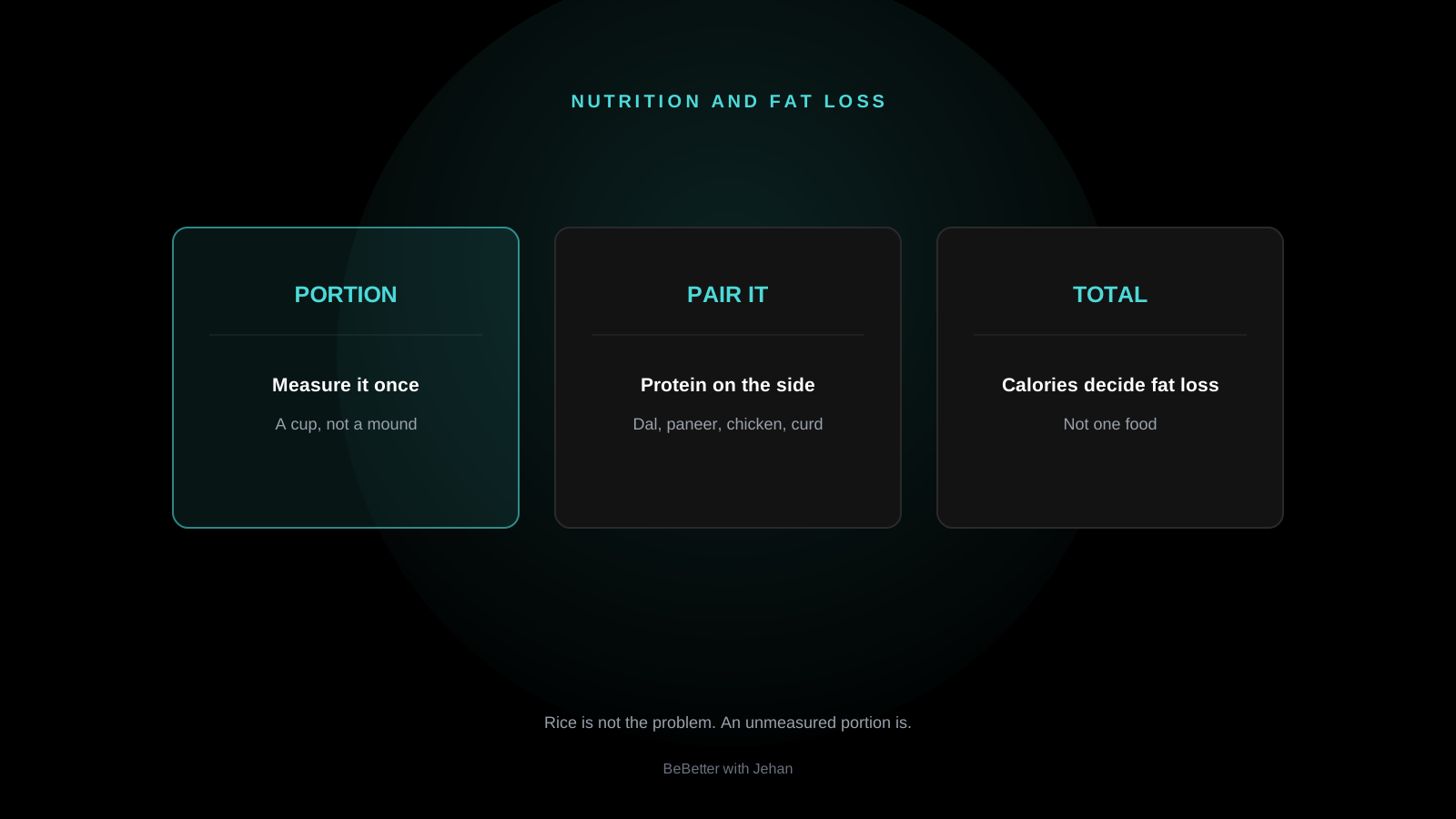
Rice fits a fat loss plan when the portion is measured and the meal contains enough protein.
- Rice is not fattening on its own. Total calories decide fat loss.
- Measure your usual portion once, so you know what you are eating.
- Put a protein source on the same plate every time.
- Choose white or brown rice based on what you prefer.
- Judge your plan by whether you can keep it for months.
Why cutting rice seems to work
Rice is often the largest single item on an Indian plate. Remove a big portion and total calories fall, so weight comes down. Part of the early drop is also water, because the body stores carbohydrate together with water. The weight loss is real, but rice was never uniquely fattening. It was simply a large, easy target.
The problem comes later. A diet without a staple food many people love is hard to keep, and when the rice comes back, so does the weight.
Energy balance is the relationship between the calories you eat and the calories you use. A sustained deficit, from any combination of foods, is what drives fat loss.
What the evidence says about carbohydrates
In a year-long trial comparing four popular diets, from very low-carbohydrate to very low-fat, weight loss was strongly associated with how closely people followed their diet and barely associated with which diet they followed (Dansinger et al., 2005). A larger trial of 609 adults compared healthy low-fat and healthy low-carbohydrate diets for 12 months and did not find a meaningful difference in weight loss between them (Gardner et al., 2018).
Neither study tested rice specifically. What they show is that carbohydrate as a category does not prevent fat loss. The broader picture is in does the type of diet matter.
How to keep rice in a fat loss plan
| Approach | Why it works |
|---|---|
| Measure your portion once | Removes the guesswork from your largest calorie item |
| Pair it with protein | Dal, paneer, chicken, fish or curd make the meal more filling |
| Add vegetables | More volume on the plate for few calories |
| Choose rice at the meal you enjoy it most | Keeps the plan sustainable |
A cooked cup of rice contains about 4 g of protein, as covered in the vegetarian protein guide, so it cannot carry a meal on its own. The protein has to come from what sits beside it. How to set your overall calorie target is in how to calculate a calorie deficit.
Coach's perspective
Almost every client from an Indian household asks whether they need to stop eating rice. I tell them no, and I have never needed to remove it from a plan.
What changes is the portion and what sits next to it. A measured cup with dal and a paneer or chicken dish is a very different meal from a heaped plate with a little sabzi.
- Rice is not fattening on its own. Calorie balance decides fat loss.
- Diet trials found adherence predicted weight loss far more than carbohydrate content.
- Early weight loss from cutting rice is partly water and partly fewer calories.
- Measure your portion and pair rice with a protein source.
- Keep foods you enjoy, so the plan lasts.
Myth versus fact
| Common claim | What the evidence says |
|---|---|
| “Rice makes you fat.” | No single food causes fat gain. A sustained calorie surplus does. |
| “You must cut carbs to lose weight.” | Trials comparing low-carbohydrate and low-fat diets found similar weight loss when people followed them. |
| “Brown rice burns more fat.” | Neither type burns fat. Brown rice has more fibre, which some people find more filling. |
The mistakes I see most
1. Cutting rice completely
It works briefly and usually ends when the rice returns.
2. Never measuring the portion
Rice portions vary enormously between plates.
3. A rice-heavy plate with little protein
Low protein makes the meal less filling and harder to stop at.
4. Replacing rice with fried snacks
Removing rice only helps if the calories are not replaced elsewhere.
Your practical checklist
- Measure your usual rice portion once, cooked.
- Decide which meals include rice.
- Add a protein source to every rice meal.
- Fill part of the plate with vegetables.
- Review your weekly weight trend after four weeks before changing anything.
Research summary
Dansinger and colleagues (2005) is a randomised trial in JAMA of 160 adults over one year. Gardner and colleagues (2018) is a larger 12-month randomised trial of 609 adults. Both studied overall diet patterns rather than rice, so applying them to rice is a reasonable inference rather than a direct finding.
The protein figure for rice comes from the published food table in the vegetarian protein guide on this site.
A nutrition plan that keeps the foods you eat.
Your Nutrition Plan is built around your own cuisine and routine, including rice if you eat it, with measured portions and swap options. Send me a message and I will walk you through the next steps.
Start my BlueprintOpens WhatsApp with a short message ready to send. Prefer to share your details directly? Complete the client intake form.
The Fitness Blueprint is ₹14,999 at present, reduced from a recommended price of ₹24,999. Flexible payment over 3 or 6 months can be arranged. See what is included.
Curious exactly what is included and what it costs? See the full pricing breakdown. Still deciding, or have a specific question first? Get in touch and I will answer honestly.
Frequently asked questions
Is rice bad for weight loss?
No. Fat loss depends on your overall calorie balance, not on any single food. Rice can fit a fat loss diet when the portion is measured and the meal includes enough protein.
Is brown rice better than white rice for weight loss?
Brown rice has more fibre, which some people find more filling. For fat loss, the portion and the rest of the meal matter far more than the type of rice.
Why do people lose weight when they stop eating rice?
Usually because removing a large portion of rice lowers total calories. Some early loss is also water, since carbohydrate is stored with water in the body.
How much rice can I eat while losing fat?
It depends on your calorie target. A measured cup of cooked rice alongside a protein source and vegetables fits most fat loss plans.
References
- Dansinger ML, Gleason JA, Griffith JL, Selker HP, Schaefer EJ. Comparison of the Atkins, Ornish, Weight Watchers, and Zone diets for weight loss and heart disease risk reduction: a randomized trial. JAMA. 2005;293(1):43-53. PubMed
- Gardner CD, Trepanowski JF, Del Gobbo LC, et al. Effect of Low-Fat vs Low-Carbohydrate Diet on 12-Month Weight Loss in Overweight Adults: The DIETFITS Randomized Clinical Trial. JAMA. 2018;319(7):667-679. PubMed
A note on medical advice. This article is educational and reflects the research as I read it. It is not medical or dietetic advice and it cannot account for your individual circumstances. If you are managing a medical condition, are pregnant, are taking medication affected by diet or activity, or are recovering from injury, please speak to your doctor or a registered dietitian first. If anything here conflicts with advice from your own clinician, follow theirs.
Questions about applying any of this? Message me directly or find me on Instagram. Back to the Knowledge Hub or the homepage. You can also read more about how I coach, see what the Fitness Blueprint costs, or get in touch.