How to hit your protein on a vegetarian Indian diet
This is the single most common practical obstacle among the clients I work with, and it deserves a proper answer rather than a shrug and a suggestion to eat more chicken.
Aim for 1.6 to 2.2 g of protein per kg of bodyweight and build each meal around one concentrated vegetarian source: paneer, curd or Greek yoghurt, soya chunks, tofu, or a whey or plant protein supplement. Dal, rajma and roti contribute, but they are carbohydrate sources first and cannot anchor a high protein meal.
For a 70 kg person that means roughly 112 to 154 g a day, or 28 to 39 g across four meals. Almost everyone eating a traditional vegetarian Indian diet without planning lands well short of this.
- Multiply bodyweight in kg by 1.8 for a sensible daily target.
- Pick one concentrated protein source for every meal before you plan anything else.
- Treat paneer, curd, soya, tofu and a protein supplement as your five workhorses.
- Count dal and rajma as a bonus, never as the anchor.
- Track honestly for two weeks. Almost everyone is 30 g lower than they assume.
Why vegetarian protein needs planning
The difficulty is real and worth stating plainly rather than talking around. Traditional Indian vegetarian meals are built around cereals and pulses. Both contain protein, but at a much lower concentration per calorie than animal sources. A bowl of dal with two rotis is genuinely nutritious, and it is closer to 12 to 15 g of protein than the 30 to 40 g you actually want in a sitting.
That gap compounds. Three meals built that way put you around 40 g for the day when your target might be 130 g. Nothing about the food is wrong. The structure simply was not designed around a protein target, because historically it never needed to be.
There is a second, less obvious issue. Plant proteins are generally lower in leucine, the amino acid most responsible for triggering muscle protein synthesis. The International Society of Sports Nutrition position stand recommends roughly 700 to 3000 mg of leucine per serving to reliably trigger that response (Jäger et al., 2017). In practice this means vegetarians benefit from slightly higher totals and from concentrating protein rather than spreading traces of it thinly across the day.
A concentrated protein source is a food where protein makes up a large share of the calories, so a normal portion delivers 15 g or more. Paneer, curd, soya, tofu, eggs and protein powder qualify. Dal, rajma, roti and rice do not, despite containing protein, because you would need an impractical volume to reach the same amount.
The real protein numbers
Here is what you are actually working with. These are planning estimates rather than laboratory values, since brand, preparation and fat content all shift them.
| Food | Typical portion | Approximate protein | Role in your plan |
|---|---|---|---|
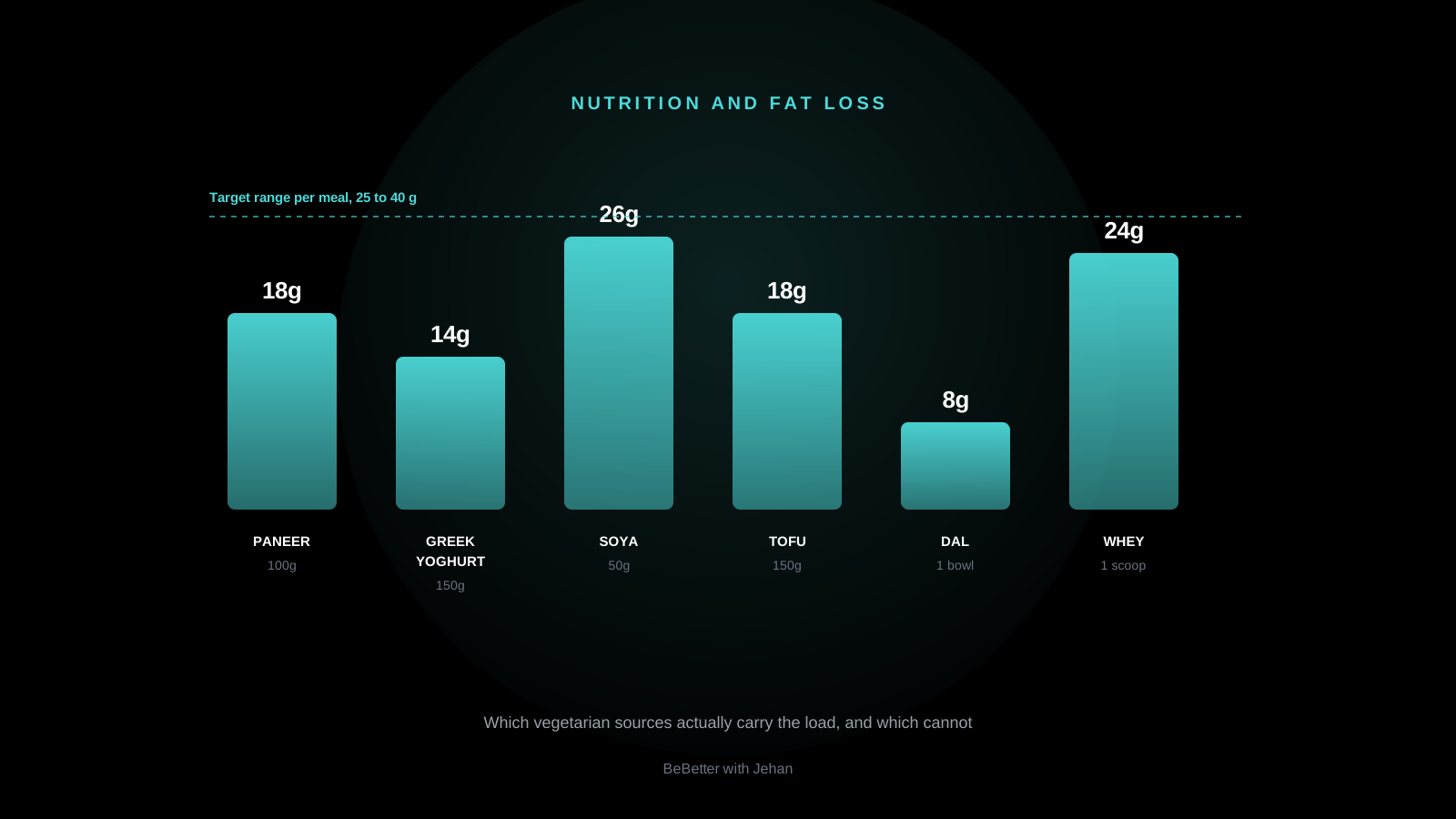
| Soya chunks (dry) | 50 g | 25 to 26 g | Anchor. Highest protein per rupee available. |
| Whey or plant protein | 1 scoop, ~30 g | 22 to 25 g | Anchor. Closes the daily gap. |
| Paneer | 100 g | 18 to 20 g | Anchor. Watch total fat if calories are tight. |
| Tofu | 150 g | 17 to 20 g | Anchor. Leaner than paneer. |
| Greek yoghurt | 150 g | 13 to 15 g | Strong support. Roughly triple regular curd. |
| Eggs (if eaten) | 2 whole | 12 to 13 g | Strong support. |
| Rajma or chana (cooked) | 1 bowl, ~150 g | 8 to 9 g | Contributor only. |
| Dal (cooked) | 1 bowl, ~150 g | 7 to 9 g | Contributor only. |
| Roasted chana | 30 g | 6 to 7 g | Useful snack contributor. |
| Regular curd | 150 g | 5 to 6 g | Minor contributor. |
| Roti | 1 medium, 30 g flour | 3 g | Incidental. |
| Rice (cooked) | 1 cup | 4 g | Incidental. |
Read that table once and the strategy becomes obvious. The top four items do almost all of the work. Everything below Greek yoghurt is a contributor, and building a plan around contributors is exactly why the total never adds up.
Your five workhorse sources
Soya chunks
The most protein-dense and least expensive option available. Fifty grams dry weight gives you around 25 g of protein, and soya is one of the few plant sources with a complete amino acid profile. The texture puts some people off initially, which is usually a preparation problem rather than an inherent one.
Paneer
Around 18 to 20 g per 100 g, and it fits into food you already eat. The one caution is fat content, which makes paneer calorie-dense. In a deficit, weigh it rather than estimating, or it quietly eats a large share of your daily calories.
Greek yoghurt
Roughly triple the protein of regular curd for a similar volume. This is the single easiest upgrade most vegetarian clients make, because it requires changing what you buy rather than what you eat.
Tofu
Comparable protein to paneer with less fat, which makes it useful when calories are tight. Less widely available outside larger cities, so treat it as a bonus rather than the foundation if supply is unreliable.
A protein supplement
Whey if you take dairy, a plant blend if not. One scoop is roughly 24 g and takes ten seconds. I class it as recommended rather than essential, but for anyone targeting 130 g or more without eggs or meat it removes a genuine daily obstacle.
Coach's perspective
The mistake I see most is not that people eat too little protein in total. It is that they spread traces of it across the day and never build a single meal that clears 30 g. Four meals at 12 g each feels like eating protein. It is 48 g, which is roughly a third of where a 70 kg person should be.
What I ask clients to do is embarrassingly simple. Before you plan anything else about a meal, name its protein source and weigh it. Everything else on the plate arranges itself around that. Most vegetarian clients gain 40 to 50 g a day from that single change, without eating anything they dislike.
A full day at 130 g
This is a realistic day for someone around 70 to 75 kg. It is not a prescription, it is a demonstration that the number is reachable with ordinary food.
| Meal | What it contains | Approximate protein |
|---|---|---|
| Breakfast | 150 g Greek yoghurt with fruit and 30 g roasted chana | 20 g |
| Lunch | 100 g paneer sabzi, 2 rotis, dal, salad | 30 g |
| Afternoon | One scoop of protein with water or milk | 24 g |
| Dinner | 50 g dry soya chunks in curry, rice, vegetables | 30 g |
| Incidental | Protein from grains, vegetables, nuts across the day | 20 to 25 g |
| Total | Roughly 125 to 130 g |
Notice that no meal is unusual and nothing was eliminated. Rotis, rice and dal all remain. The only structural change is that each meal has a named, weighed protein anchor rather than relying on whatever happened to be on the plate.
Practical swaps that add protein
| Instead of | Use | Protein gained |
|---|---|---|
| Regular curd, 150 g | Greek yoghurt, 150 g | About 8 g |
| Aloo sabzi | Paneer or tofu sabzi | About 18 g |
| Poha or upma alone | The same with 50 g soya or paneer added | 18 to 25 g |
| Biscuits with tea | 30 g roasted chana | About 6 g |
| Plain milk, 200 ml | Milk with half a scoop of protein | About 12 g |
| Rajma-only bowl | Rajma with a side of curd or paneer | 8 to 18 g |
- Target 1.6 to 2.2 g of protein per kg of bodyweight. Most people do well around 1.8.
- Build every meal around one concentrated source before planning anything else.
- Soya, protein powder, paneer, tofu and Greek yoghurt do the heavy lifting.
- Dal, rajma, roti and rice contribute but cannot anchor a meal.
- Plant proteins are lower in leucine, so vegetarians benefit from slightly higher totals and more concentrated servings.
- Track honestly for two weeks before deciding anything. The gap is almost always larger than people expect.
Myth versus fact
| Common claim | What the evidence says |
|---|---|
| “Indian vegetarian food is naturally high in protein.” | It is nutritious but not protein-dense. A typical dal and roti meal delivers roughly 12 to 15 g against a 30 to 40 g per-meal target. |
| “You cannot build muscle without meat.” | You can. Total protein and resistance training determine the outcome. Vegetarians need more deliberate planning, not different physiology. |
| “Combining rice and dal makes a complete protein, so quantity does not matter.” | Complementary proteins address amino acid profile, not quantity. You still need enough total grams, and that is where most plans fall short. |
| “Soya lowers testosterone in men.” | Evidence does not support meaningful hormonal effects at normal intakes. If you have a specific medical concern, raise it with your doctor. |
| “Protein powder is unnecessary if you eat well.” | It is genuinely optional, but for a vegetarian targeting 130 g or more it removes a real daily obstacle. Convenience is a legitimate reason. |
The mistakes I see most
1. Counting dal as the protein source
It is a carbohydrate source that happens to contain protein. If your meal plan relies on it for protein, the total will always fall short.
2. Using regular curd instead of Greek yoghurt
Same volume, roughly a third of the protein. This one substitution is worth about 8 g per serving for almost no effort.
3. Estimating paneer instead of weighing it
Paneer is calorie-dense. Eyeballed portions are a common reason a vegetarian deficit stops working.
4. Back-loading everything into dinner
One large protein meal after two light ones leaves you under-fed all day and does less for muscle retention than three balanced servings.
5. Treating the supplement as the plan
If three of your four daily servings come from a tub, the structure needs rebuilding around whole foods with the supplement closing a gap.
6. Assuming the total is fine without checking
Almost everyone overestimates by 30 g or more. Two weeks of honest logging settles it.
Your practical checklist
- Calculate your target: bodyweight in kg multiplied by 1.8 is a sensible start.
- Divide it across the meals you realistically eat, aiming for 25 to 40 g each.
- Choose a default anchor for each meal so you are not deciding from scratch daily.
- Switch regular curd for Greek yoghurt as your first change.
- Keep dry soya chunks in the house permanently. They are the cheapest protein available.
- Weigh paneer rather than estimating it, at least for the first fortnight.
- Add a protein supplement if you are more than 20 g short after the above.
- Pair all of it with resistance training at least twice a week, or the protein largely goes to waste.
Research summary
The underlying protein science here is the same as in my main guide to protein intake, so I will not repeat it in full. Two sources carry most of the weight.
The ISSN position stand establishes the 1.4 to 2.0 g/kg range for people who train, along with the per-serving guidance of roughly 0.25 g/kg or 20 to 40 g, and the leucine threshold that matters more for plant-based eaters. Position stands carry more weight than single studies because they represent reviewed consensus.
Morton and colleagues (2018) is a meta-analysis across 49 studies identifying a plateau in benefit around 1.6 g/kg. Its limitation for this article is that it examined supplementation during resistance training rather than vegetarian diets specifically.
Where the evidence is thinner: the specific claim that vegetarians need a higher total than omnivores is reasonable and widely accepted on mechanistic grounds, given lower leucine density and digestibility in plant sources, but the precise size of that adjustment is not well established. Treat "slightly higher, and more concentrated per serving" as sound practice rather than a precisely quantified finding. The food values in this article are standard composition estimates, not laboratory measurements of your specific brand.
Knowing the numbers is not the same as eating them.
Building a week of vegetarian meals that reliably hits your protein target, around a job and a real kitchen, is the part that takes work. That is what the Nutrition Plan inside the Fitness Blueprint does. Your targets are calculated from your own body, a full day of vegetarian meals is written out with quantities, and swap options mean eating out does not end your week. Your Progress Dashboard then tracks your weekly protein average and flags it when it slips.
DM ‘BLUEPRINT’ to get startedThe Fitness Blueprint is ₹14,999 at present, reduced from a recommended price of ₹24,999. Flexible payment over 3 or 6 months can be arranged. See what is included.
Hitting protein is one half of protecting muscle while you lose fat. The full picture is here.
Curious exactly what is included and what it costs? See the full pricing breakdown. Still deciding, or have a specific question first? Get in touch and I will answer honestly.
Frequently asked questions
Can you build muscle on a vegetarian Indian diet?
Yes. Total daily protein and resistance training are what matter, not whether the protein came from an animal. Plant sources are generally less concentrated per calorie and lower in leucine, so vegetarians typically need slightly more deliberate planning and often a marginally higher total, but the outcome is the same.
Is dal enough protein for a meal?
No, not on its own. A typical bowl of cooked dal provides roughly 7 to 9 g of protein, against a per-meal target of 25 to 40 g. Dal is a useful contributor but it cannot be the anchor of a high protein meal.
How much protein is in 100 g of paneer?
Roughly 18 to 20 g, which makes it one of the most efficient vegetarian protein sources available in an Indian kitchen. Values vary by brand and fat content, so treat this as a planning estimate.
Do I need whey protein as a vegetarian?
Not strictly, but it makes the arithmetic considerably easier. If you are targeting 130 g or more a day without eggs or meat, one scoop removes about 24 g of daily planning burden. I class it as recommended rather than essential.
Is soya safe to eat every day?
For most people, yes. Moderate soya intake is well tolerated and is one of the few plant sources with a complete amino acid profile. If you have a thyroid condition or are unsure, raise it with your doctor rather than relying on internet advice.
What about protein from roti and rice?
They contribute a few grams per serving and it does add up across a day, but they are primarily carbohydrate sources. Counting on them for protein is how most vegetarian plans end up 30 to 40 g short without anyone noticing.
References
- Jäger R, Kerksick CM, Campbell BI, et al. International Society of Sports Nutrition Position Stand: protein and exercise. Journal of the International Society of Sports Nutrition. 2017;14:20. PubMed
- Morton RW, Murphy KT, McKellar SR, et al. A systematic review, meta-analysis and meta-regression of the effect of protein supplementation on resistance training-induced gains in muscle mass and strength in healthy adults. British Journal of Sports Medicine. 2018;52(6):376-384. PubMed
- Helms ER, Aragon AA, Fitschen PJ. Evidence-based recommendations for natural bodybuilding contest preparation: nutrition and supplementation. Journal of the International Society of Sports Nutrition. 2014;11:20. PubMed
A note on medical advice. This article is educational and reflects the research as I read it. It is not medical or dietetic advice and it cannot account for your individual circumstances. If you are managing a medical condition, are pregnant, are taking medication affected by diet or activity, or are recovering from injury, please speak to your doctor or a registered dietitian first. If anything here conflicts with advice from your own clinician, follow theirs.
Questions about applying any of this? Message me directly or find me on Instagram. Back to the Knowledge Hub or the homepage. You can also read more about how I coach, see what the Fitness Blueprint costs, or get in touch.