High-protein Indian breakfast ideas for busy mornings
Breakfast is usually the lowest-protein meal of the Indian day. Poha, upma, paratha and chai are comforting, but on their own they leave a gap that is hard to close later.
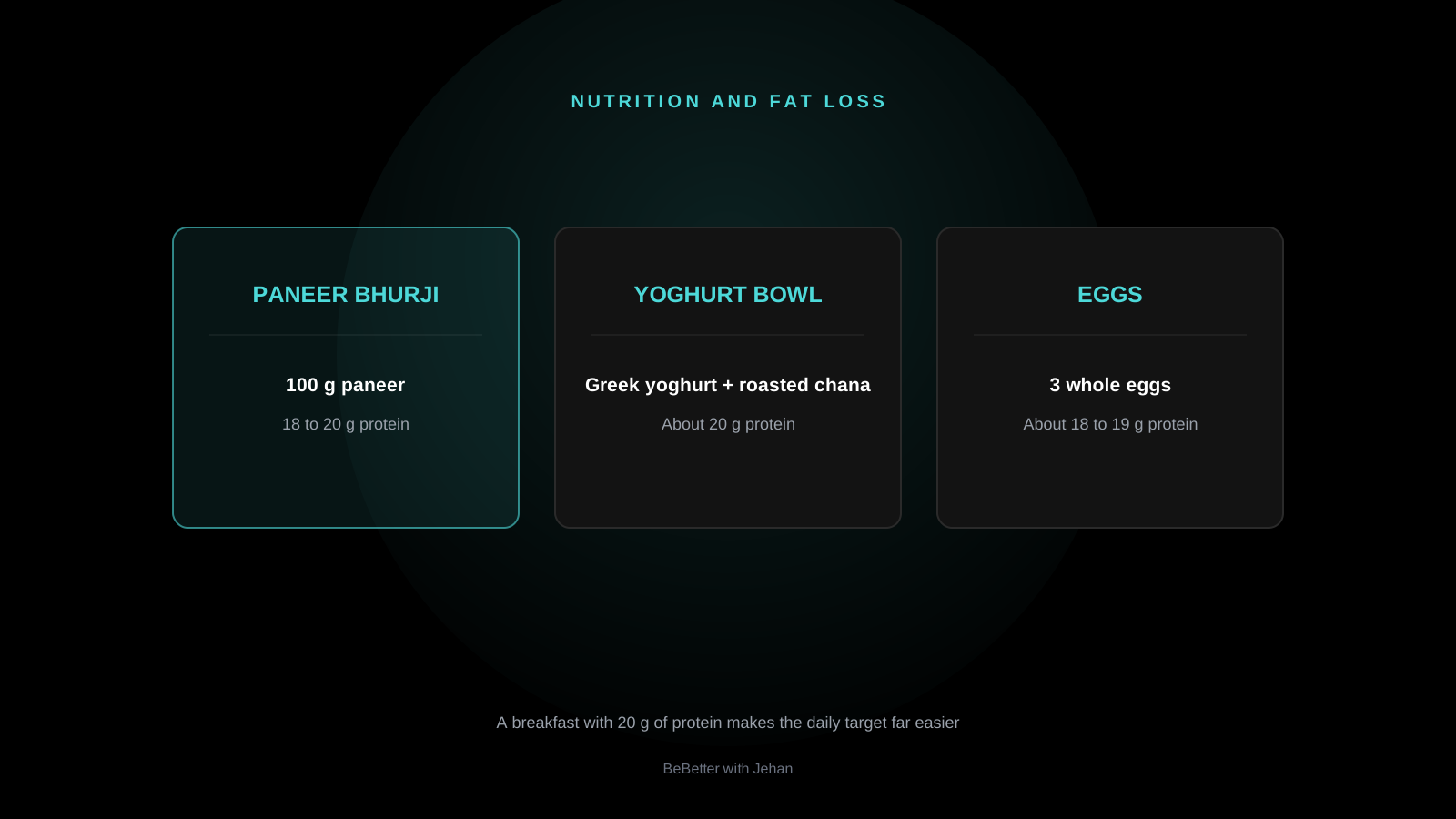
A high-protein Indian breakfast provides around 20 to 30 g of protein. Simple options include paneer bhurji (about 18 to 20 g from 100 g of paneer), Greek yoghurt with roasted chana (about 20 g) and three eggs (about 18 to 19 g).
The easiest approach is to keep the breakfasts you enjoy and add a protein source to them.
- Aim for around 20 to 30 g of protein at breakfast.
- Paneer, Greek yoghurt, eggs and soya do the heavy lifting.
- Add a protein side to poha, upma or paratha rather than replacing them.
- Prepare one component the night before on busy weeks.
- A protein shake is a reasonable backup.
Why breakfast matters
A review suggests about 0.4 g of protein per kg of bodyweight per meal across at least four meals to support muscle building (Schoenfeld and Aragon, 2018). The ISSN position stand describes 20 to 40 g per serving as a reasonable range for people who train (Jäger et al., 2017). A breakfast with only 5 to 8 g leaves a gap that later meals have to make up. More on distribution is in how much protein your body can use in one meal.
High-protein breakfast ideas
| Breakfast | Portion | Protein |
|---|---|---|
| Paneer bhurji | 100 g paneer | 18 to 20 g |
| Greek yoghurt bowl | 150 g Greek yoghurt + 30 g roasted chana | About 20 g |
| Eggs | 2 whole eggs | 12 to 13 g |
| Soya chunks, added to upma or poha | 50 g dry | 25 to 26 g |
| Protein shake | 1 scoop, about 30 g | 22 to 25 g |
| Regular curd on the side | 150 g | 5 to 6 g |
A third egg takes the egg breakfast to about 18 to 19 g. For more vegetarian sources, see how to hit your protein on a vegetarian Indian diet.
An anchor food is a food that supplies most of a meal's protein, such as paneer, eggs, Greek yoghurt or soya. Foods like dal and roti contribute, but cannot carry the meal alone.
Upgrading the breakfast you already eat
| Usual breakfast | Simple upgrade |
|---|---|
| Poha or upma | Add soya chunks, or have Greek yoghurt on the side |
| Paratha | Use paneer stuffing and add curd |
| Toast and chai | Add eggs or a paneer bhurji |
| Fruit only | Add Greek yoghurt and roasted chana |
Coach's perspective
I do not ask clients to give up the breakfasts they grew up with. I ask them to add an anchor. Poha with a bowl of Greek yoghurt is still poha, but it is a different meal.
On the busiest weeks, the protein shake is not a failure. It is a plan.
- Aim for about 20 to 30 g of protein at breakfast.
- Paneer, Greek yoghurt, eggs and soya are the main anchors.
- Add protein to the breakfasts you already enjoy.
- Preparation the night before saves busy mornings.
- A protein shake is a sensible backup.
Myth versus fact
| Common claim | What the evidence says |
|---|---|
| “Indian breakfasts cannot be high in protein.” | Adding paneer, eggs, Greek yoghurt or soya makes them high in protein. |
| “You need special protein foods.” | Everyday foods such as paneer, curd and eggs work well. |
| “Breakfast must be big to be high in protein.” | A moderate portion of the right anchor food is enough. |
The mistakes I see most
1. Relying on dal or roti for breakfast protein
They contribute, but cannot carry a meal alone.
2. Skipping breakfast and overeating later
Many find a protein-led breakfast makes the rest of the day easier.
3. Using regular curd as the main source
Greek yoghurt has roughly three times the protein of regular curd.
4. Changing everything at once
Upgrade one breakfast at a time.
Your practical checklist
- Note what you usually eat for breakfast this week.
- Estimate its protein using the table.
- Add one anchor food to reach around 20 g.
- Prepare that component the night before on busy days.
- Keep a protein shake as a backup.
Research summary
Schoenfeld and Aragon (2018) and Jäger and colleagues (2017) support the per-meal protein targets. The food protein figures are the same published values used in the vegetarian protein guide on this site, and actual values vary by brand and preparation.
Limitation: there is little direct research on Indian breakfast patterns specifically. The meal suggestions are practical coaching guidance built on the protein research.
Breakfasts built around your routine.
Your Nutrition Plan sets out every meal, breakfast included, with quantities and swap options that suit your cuisine. Send me a message and I will walk you through the next steps.
Start my BlueprintOpens WhatsApp with a short message ready to send. Prefer to share your details directly? Complete the client intake form.
The Fitness Blueprint is ₹14,999 at present, reduced from a recommended price of ₹24,999. Flexible payment over 3 or 6 months can be arranged. See what is included.
Curious exactly what is included and what it costs? See the full pricing breakdown. Still deciding, or have a specific question first? Get in touch and I will answer honestly.
Frequently asked questions
What is a good high-protein Indian breakfast?
Paneer bhurji, Greek yoghurt with roasted chana, or an egg-based breakfast can each provide around 20 g of protein.
How much protein should breakfast have?
For many people, around 20 to 30 g is a useful target, in line with research suggesting about 0.4 g per kg per meal.
Can poha or upma be high in protein?
Not on their own. Adding a protein side, such as curd, paneer or eggs, raises the protein of the meal.
Is a protein shake a good breakfast?
It can help on busy days. One scoop of whey or plant protein provides about 22 to 25 g of protein.
References
- Jäger R, Kerksick CM, Campbell BI, et al. International Society of Sports Nutrition Position Stand: protein and exercise. Journal of the International Society of Sports Nutrition. 2017;14:20. PubMed
- Schoenfeld BJ, Aragon AA. How much protein can the body use in a single meal for muscle-building? Implications for daily protein distribution. Journal of the International Society of Sports Nutrition. 2018;15:10. Journal
A note on medical advice. This article is educational and reflects the research as I read it. It is not medical or dietetic advice and it cannot account for your individual circumstances. If you are managing a medical condition, are pregnant, are taking medication affected by diet or activity, or are recovering from injury, please speak to your doctor or a registered dietitian first. If anything here conflicts with advice from your own clinician, follow theirs.
Questions about applying any of this? Message me directly or find me on Instagram. Back to the Knowledge Hub or the homepage. You can also read more about how I coach, see what the Fitness Blueprint costs, or get in touch.