How to eat out and travel without derailing your progress
Client dinners, hotel buffets and airport food are where most well-run plans quietly unravel. Not because one meal matters, but because a week of them does.

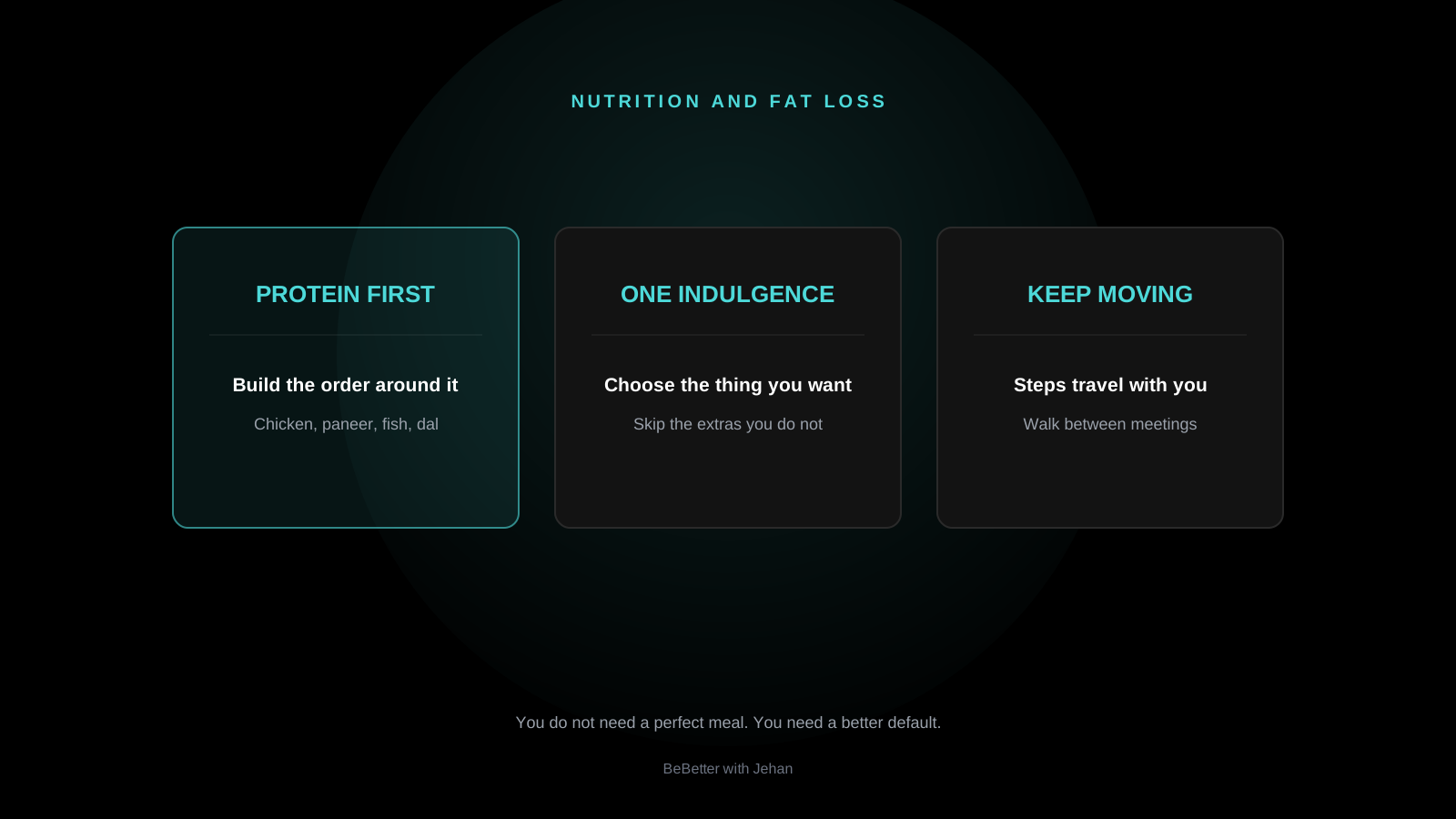
Use three rules: build every meal around a protein source, choose one indulgence rather than several, and keep your daily steps up. You are not trying to eat perfectly away from home. You are trying to stop a few days of travel or a run of client dinners from adding up to a lost month.
Your weekly average is what decides the result, not any single meal.
- Pick the protein first, then build the rest of the order around it.
- Choose one indulgence per meal: dessert, bread or a drink, not all three.
- Keep walking. Steps travel with you even when the gym does not.
- Do not skip meals to bank calories. It usually backfires.
- Judge the week, not the dinner.
Why travel weeks derail plans
A single restaurant meal is rarely the problem. The problem is that eating out removes the structure that normally does the work for you: known portions, a protein source already decided, a routine that makes the right choice automatic.
Away from that structure, every meal becomes a fresh decision, made tired, often hungry and usually in company. Decisions made that way tend to drift in one direction. Over a week of travel the drift is what costs you, not any individual plate.
A default is the choice you make when you are not thinking about it. The aim of these rules is not willpower at every meal. It is to make the reasonable option the one you reach for automatically.
The three rules
1. Protein first
Decide the protein before anything else on the menu. The International Society of Sports Nutrition suggests roughly 20 to 40 g of protein per serving for people who train (Jäger et al., 2017), and building the order around it does two jobs at once: it protects muscle and it makes the meal more filling, which reduces how much of everything else you want. The reasoning behind the number is in the guide to protein intake.
2. One indulgence
Choose the thing you actually want, and skip the extras you only eat because they arrived. Dessert, a second bread, a drink, a fried starter: pick one. This keeps restaurant meals enjoyable, which matters, because a plan you resent is a plan you abandon.
3. Keep moving
Your step count is the one lever that travels with you. A large meta-analysis found the health benefits of daily steps rise steeply before levelling off between roughly 8,000 and 10,000 steps a day for adults under 60 (Paluch et al., 2022). Walking between meetings or exploring a city on foot widens your energy deficit at almost no recovery cost. More on that in how many steps a day you need.
What to order
| Restaurant | Easier to fit | Adds up fastest |
|---|---|---|
| North Indian | Tandoori dishes, tikka, dal, roti | Rich gravies, butter naan, fried starters |
| South Indian | Idli, dosa with sambar, a protein side | Several dosas, ghee-heavy items |
| Chinese and pan-Asian | Steamed or stir-fried protein, clear soups | Fried rice, deep-fried dishes, sweet sauces |
| Italian | Grilled meat or fish, salad, a shared pasta | Cream sauces, garlic bread, large portions |
| Cafe and fast food | Grilled wraps, eggs, salads with protein | Pastries, fries, sweetened drinks |
None of these is banned. The right-hand column is simply where calories accumulate without much protein or fullness to show for it.
Coach's perspective
The client dinner is rarely the meal that does the damage. It is the hotel breakfast that became three plates, the airport snack, and the room service at eleven at night because dinner ran late.
What I ask clients to do on travel weeks is lower the bar deliberately. You are aiming to hold your position, not to make progress. A week where your weight is flat and you kept training even once is a genuinely good travel week.
Hotels, flights and long days
- Hotel breakfast: start with eggs or another protein, add fruit, then choose one indulgent item. Buffets are a volume problem more than a food-choice problem.
- Flights and airports: carry something with protein, such as roasted chana or a protein bar, so the choice is not made for you at the gate.
- Hotel gyms: a short full-body session is enough to hold your progress. See whether a 30-minute workout works.
- Alcohol: often the biggest single variable on a work trip. It is covered in alcohol and fat loss.
- Your weekly average decides the result, not any one meal.
- Build every meal around a protein source first.
- Choose one indulgence per meal rather than several.
- Steps are the lever that travels with you.
- On travel weeks, aim to hold your position, not to make progress.
Myth versus fact
| Common claim | What the evidence says |
|---|---|
| “Eating out means the week is ruined.” | One meal has a small effect on a weekly average. Abandoning the plan afterwards is what costs you. |
| “Skip lunch to save calories for dinner.” | Arriving very hungry usually means eating more overall. A normal protein-led lunch tends to work better. |
| “You need to track every restaurant meal.” | Rough structure works well enough away from home. Protein first and one indulgence gets you most of the way. |
The mistakes I see most
1. Treating travel as a break from the plan
A week off structure often becomes three. Lowering the bar keeps the habit alive.
2. Sampling everything at a buffet
Small portions of many things add up to far more than one full plate.
3. Letting steps collapse
Long meetings and taxis can halve your step count without you noticing.
4. Compensating the next day
Very low intake after a big meal tends to trigger the next one. Return to normal instead.
Your practical checklist
- Before you look at the menu, decide the protein.
- Choose one indulgence for the meal and enjoy it.
- Pack one protein snack for travel days.
- Walk between meetings where you can.
- Weigh yourself on your normal schedule, not the morning after a big dinner.
- Return to your normal plan at the next meal, not next Monday.
Research summary
The direct evidence here is thin, and it is worth saying so. There is little controlled research on specific restaurant or travel strategies. This article applies better-established principles to the situation rather than citing trials of travel itself.
Jäger and colleagues (2017) is the ISSN position stand behind the per-meal protein guidance. Paluch and colleagues (2022) is a meta-analysis of 15 cohorts linking daily steps to lower mortality; it measured health outcomes, not fat loss, so it supports the value of walking rather than a specific fat-loss effect.
The three rules are practical coaching judgement built on those foundations. They are sound, but they are not a tested protocol.
A plan that already knows about your travel weeks.
Your Blueprint includes swap options for eating out and guidance for travel weeks in the Resources library, so a work trip does not mean starting again when you get home. Answer a few quick questions and you will see what your own plan could look like.
Start my BlueprintEight quick questions, about 2 minutes, and you see a preview of your own Blueprint before you message me. The Fitness Blueprint is ₹14,999 at present, reduced from a recommended price of ₹24,999. Flexible payment over 3 or 6 months can be arranged. See what is included.
Curious exactly what is included and what it costs? See the full pricing breakdown. Still deciding, or have a specific question first? Get in touch and I will answer honestly.
Frequently asked questions
Can I still lose fat if I eat out several times a week?
Yes. What matters is your weekly average, not any single meal. Building each restaurant meal around a protein source and choosing one indulgence rather than three keeps the week on track.
What should I order at an Indian restaurant?
Tandoori or grilled dishes, dal, paneer or chicken tikka, and roti over naan are usually the easiest to fit. Rich gravies, fried starters and multiple breads add up fastest.
How do I handle hotel breakfast buffets?
Start with eggs or another protein, add fruit, and choose one indulgent item rather than sampling everything. Buffets are a volume problem more than a food-choice problem.
Should I skip meals before a big dinner to save calories?
Usually not. Arriving very hungry tends to mean eating more overall. A normal protein-led lunch generally works better than saving everything for the evening.
References
- Jäger R, Kerksick CM, Campbell BI, et al. International Society of Sports Nutrition Position Stand: protein and exercise. Journal of the International Society of Sports Nutrition. 2017;14:20. PubMed
- Paluch AE, Bajpai S, Bassett DR, et al. Daily steps and all-cause mortality: a meta-analysis of 15 international cohorts. The Lancet Public Health. 2022;7(3):e219-e228. PubMed
A note on medical advice. This article is educational and reflects the research as I read it. It is not medical or dietetic advice and it cannot account for your individual circumstances. If you are managing a medical condition, are pregnant, are taking medication affected by diet or activity, or are recovering from injury, please speak to your doctor or a registered dietitian first. If anything here conflicts with advice from your own clinician, follow theirs.
Questions about applying any of this? Message me directly or find me on Instagram. Back to the Knowledge Hub or the homepage. You can also read more about how I coach, see what the Fitness Blueprint costs, or get in touch.