How to enjoy festivals without undoing your progress
Diwali, weddings, Eid, Christmas and a run of family celebrations can stretch across weeks. The research on festive eating carries a reassuring message and a warning in the same result.
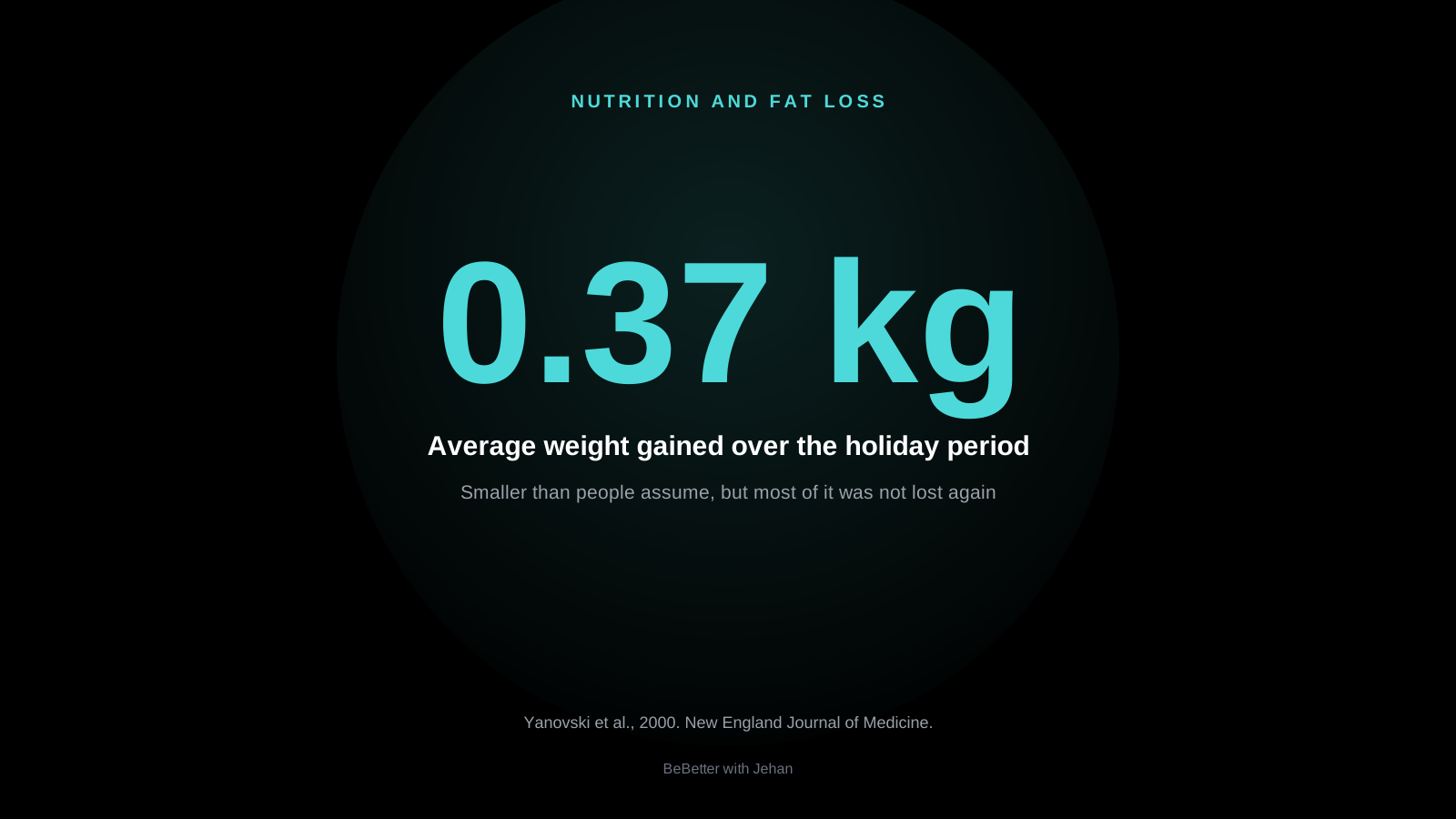
Festive weight gain is smaller than most people think. In a study of 195 adults, the average gain over the holiday period was 0.37 kg. The warning is that this gain was not reversed over the following year, so small annual increases can quietly accumulate. The answer is to enjoy the occasions that matter, then return to your normal routine promptly.
The risk is not the celebration. It is never fully returning to routine afterwards.
- Enjoy the foods that make the occasion special.
- Keep training and walking through the season, even at reduced volume.
- Skip the background eating that does not mean anything to you.
- Return to your normal plan at the next meal, not next Monday.
- Do not crash diet afterwards.
What the research found
Yanovski and colleagues measured the weight of 195 adults before, during and after the winter holiday period, rather than relying on self-reported estimates (Yanovski et al., 2000).
| Finding | Result |
|---|---|
| Average gain over the holiday period | 0.37 kg |
| Participants gaining 2.3 kg or more | Fewer than 10 percent |
| Net gain from autumn to late winter | 0.48 kg |
| Change over the following year | Not reversed |
The authors also noted a trend towards larger gains in participants who were already overweight. And their conclusion was the important part: because the gain was not reversed, small annual festive increases probably contribute to the gradual weight gain many people experience through adulthood.
Weight creep is the slow, cumulative increase in bodyweight across years, often through small gains that are never fully lost. It is rarely caused by one dramatic period. It is usually the sum of many small ones.
What this means for you
Two things follow, and they pull in opposite directions. The first is reassurance: one festival season is unlikely to undo months of work. The second is a warning: the problem is not the gain itself, but the habit of never quite returning to routine afterwards. That is how a reasonable season becomes the start of a slow drift.
Coach's perspective
I never ask clients to avoid festivals, and I would be suspicious of any plan that did. These are some of the most important days of the year, and food is part of what makes them meaningful.
What I ask instead is simple: enjoy the occasion, and be back on your normal plan at the very next meal. Not after the season, not next Monday. The next meal. That single habit protects more progress than any amount of restraint during the celebration itself.
A sensible festival approach
- Choose what matters. Enjoy the foods that make the occasion special. Skip the packaged sweets and snacks you eat simply because they are in the house.
- Keep protein in the picture. A protein-led meal earlier in the day helps with fullness before a big evening.
- Keep training, even briefly. A shorter session keeps the habit alive. See whether a 30-minute workout works.
- Keep walking. Steps are easy to maintain and protect your energy balance.
Getting back on track afterwards
Return to your normal plan at the next meal. Expect the scale to be higher for a few days, partly from water and food volume, and do not respond by crash dieting, which tends to trigger the next overeating episode. Missing days does not erase a habit, as covered in the 21-day habit myth. What erases it is deciding the plan is over.
- Average festive weight gain in the research was 0.37 kg, smaller than commonly claimed.
- The gain was not reversed the following year, which is how weight creep happens.
- Enjoy the foods that make the occasion special and skip the background eating.
- Keep training and walking through the season, even at reduced volume.
- Return to your plan at the next meal, and do not crash diet afterwards.
Myth versus fact
| Common claim | What the evidence says |
|---|---|
| “Everyone gains several kilos over the holidays.” | Measured average gain in the research was 0.37 kg, with fewer than 10 percent gaining 2.3 kg or more. |
| “A small gain does not matter.” | Individually, no. But the study found it was not reversed, so it can accumulate year on year. |
| “Diet hard afterwards to undo it.” | Aggressive restriction tends to trigger rebound eating. A prompt return to normal works better. |
The mistakes I see most
1. Writing off the entire season
Treating weeks of festivities as one long break is how a small gain becomes a large one.
2. Eating everything because it is available
The occasions matter. The open box of sweets on the counter does not.
3. Stopping training completely
A short session keeps the habit. Restarting from nothing is far harder.
4. Crash dieting in January or after Diwali
Very low intake usually backfires. Resume your normal plan instead.
Your practical checklist
- List the celebrations that genuinely matter to you this season.
- Plan to enjoy those fully.
- Keep at least one or two short training sessions each week.
- Keep your daily walking going.
- Resume your normal plan at the next meal after each occasion.
- Weigh yourself a week after the season ends, not the morning after.
Research summary
Yanovski and colleagues (2000) is a prospective study in the New England Journal of Medicine that measured weight directly rather than relying on recall, which is its main strength. Its limitations are worth stating: it studied a convenience sample of adults in the United States over the Western winter holidays, not Indian festivals specifically, and the 0.37 kg figure is an average that hides wide individual variation.
Applying it to Diwali, weddings or Eid is a reasonable extrapolation of the principle, not a direct finding. Lally and colleagues (2010) supports the point that a missed day does not undo a habit.
A plan that expects real life, festivals included.
Your Blueprint includes a reset system and guidance for restarting after a break, so a festive season never turns into a lost quarter. Answer a few quick questions to see what your own plan could look like.
Start my BlueprintEight quick questions, about 2 minutes, and you see a preview of your own Blueprint before you message me. The Fitness Blueprint is ₹14,999 at present, reduced from a recommended price of ₹24,999. Flexible payment over 3 or 6 months can be arranged. See what is included.
Curious exactly what is included and what it costs? See the full pricing breakdown. Still deciding, or have a specific question first? Get in touch and I will answer honestly.
Frequently asked questions
How much weight do people gain over festival season?
In a well-known study of 195 adults, average weight gain over the holiday period was 0.37 kg, much smaller than the figure commonly claimed. The catch was that it was not lost again over the following year.
Should I diet before Diwali to make room?
Not aggressively. A sensible approach is to keep your normal plan running, enjoy the occasions that matter, and return to routine as soon as they pass.
Is it fine to eat sweets during festivals?
Yes. The aim is to enjoy the foods that make the occasion special, rather than eating everything available on every day of the season.
What if I gain weight over the festive period?
Return to your normal plan at the next meal. Some of the increase will be water and food volume. Very aggressive dieting afterwards tends to backfire.
References
- Yanovski JA, Yanovski SZ, Sovik KN, Nguyen TT, O'Neil PM, Sebring NG. A prospective study of holiday weight gain. New England Journal of Medicine. 2000;342(12):861-867. PubMed
- Lally P, van Jaarsveld CHM, Potts HWW, Wardle J. How are habits formed: Modelling habit formation in the real world. European Journal of Social Psychology. 2010;40(6):998-1009. Journal
A note on medical advice. This article is educational and reflects the research as I read it. It is not medical or dietetic advice and it cannot account for your individual circumstances. If you are managing a medical condition, are pregnant, are taking medication affected by diet or activity, or are recovering from injury, please speak to your doctor or a registered dietitian first. If anything here conflicts with advice from your own clinician, follow theirs.
Questions about applying any of this? Message me directly or find me on Instagram. Back to the Knowledge Hub or the homepage. You can also read more about how I coach, see what the Fitness Blueprint costs, or get in touch.