Alcohol and fat loss: what a few drinks actually cost you
For many working professionals, alcohol comes with client dinners, team events and weekends. This is not a case against drinking. It is an honest account of what it costs and how to manage it.
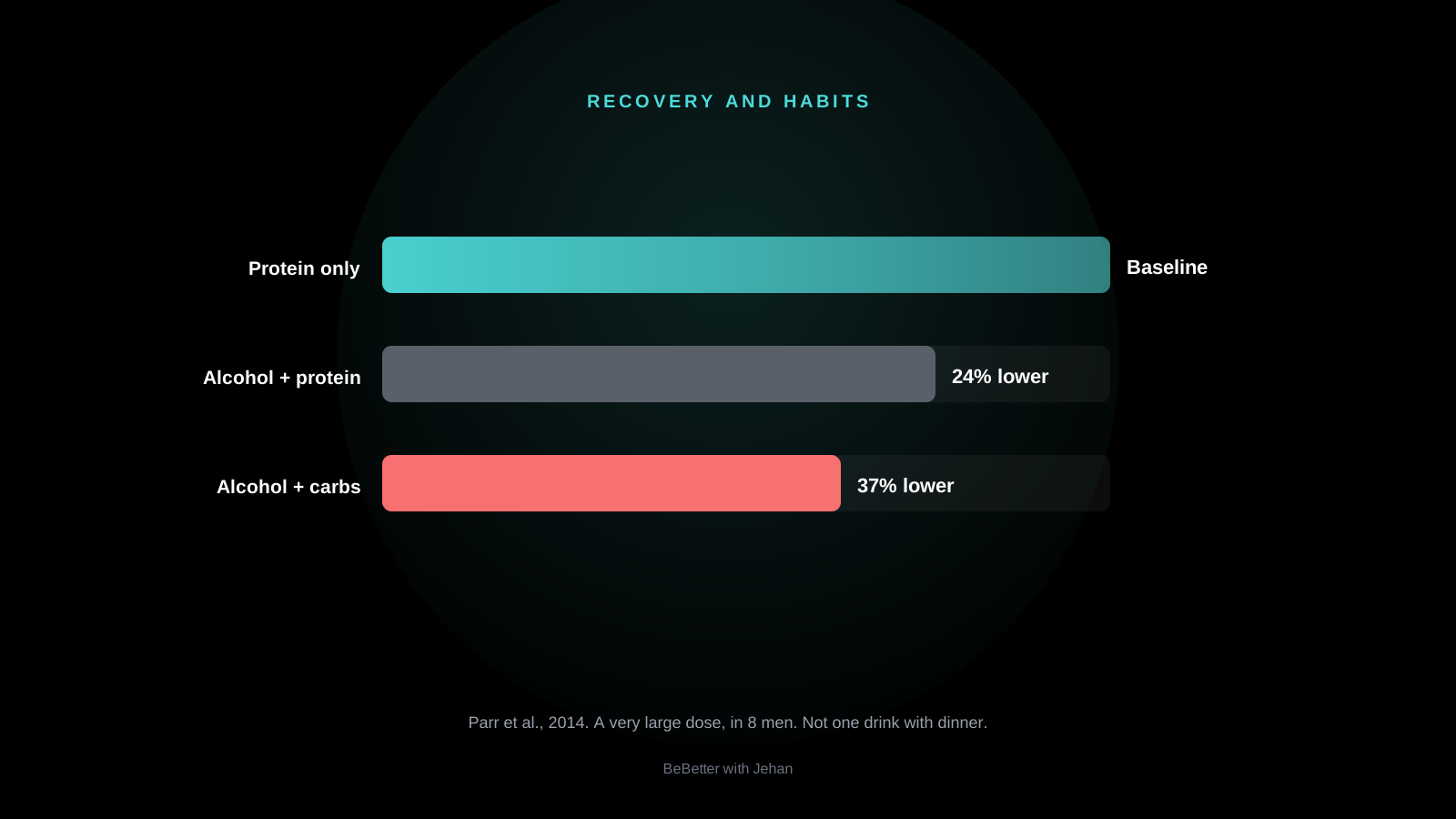
Alcohol affects fat loss mainly through calories: it adds energy with little fullness, and drinking often leads to eating more. On recovery, a study found that a very large dose of alcohol after training reduced muscle protein synthesis by 24 to 37 percent. That dose was far more than a drink with dinner, which the study did not test.
Occasional, moderate drinking can fit a plan. Regular heavy drinking makes progress considerably harder.
- Alcohol adds calories without much fullness.
- The bigger cost is often the food that follows it.
- Heavy drinking after training is the most costly scenario for recovery.
- A drink with dinner is a very different situation from a heavy night.
- Choose lower-calorie drinks and set a limit before you start.
Alcohol and calories
Alcohol provides energy but very little fullness, so the calories in drinks tend to be added on top of what you eat rather than replacing it. Mixers, beer and cocktails add more. And alcohol tends to lower restraint, which is why the late-night food after drinks is often a bigger cost than the drinks themselves.
| Source | Why it adds up |
|---|---|
| The drinks themselves | Energy with little fullness |
| Sugary mixers and cocktails | Adds substantially to each drink |
| Food during and after | Lowered restraint, often late at night |
| The next day | Poor sleep and low energy often mean more eating and less movement |
Alcohol and recovery
Parr and colleagues had eight physically active men complete a demanding training session, then consume protein alone, alcohol with protein, or alcohol with carbohydrate, on separate occasions. Compared with protein alone, muscle protein synthesis was 24 percent lower with alcohol and protein, and 37 percent lower with alcohol and carbohydrate. The authors concluded that alcohol suppresses the muscle-building response and may impair recovery and adaptation to training (Parr et al., 2014).
Muscle protein synthesis is the process of building new muscle protein, which rises after training. It is one of the main ways muscle adapts and grows over time.
Why the dose matters
This is the part most coverage of the study leaves out. Participants drank a very large amount, 1.5 g of alcohol per kg of bodyweight, which for an 80 kg person is roughly twelve standard drinks. The study included only eight men and one training session. It tells us that heavy drinking after training blunts recovery. It does not tell us that one drink with dinner does, because that was never tested.
Coach's perspective
I do not ask clients to stop drinking, and a plan that requires that is one many people will not follow. What I ask is that they decide in advance.
Choose the occasions that matter, set a limit before the first drink, have a protein-led meal first, and avoid turning a hard training day into a heavy night. That handles most of the cost without making anyone feel they are on a punishment plan.
How to manage it
- Decide before you start. A limit set in advance holds far better than one set after the second drink.
- Eat first. A protein-led meal before drinking reduces the late-night food that follows.
- Choose lower-calorie drinks. Spirits with zero-calorie mixers are easier to fit than sweet cocktails.
- Avoid heavy drinking straight after hard training. That is the situation the research suggests costs recovery most.
- Protect your sleep. Poor sleep compounds the cost, as covered in sleep and fat loss.
Work dinners and travel are often where alcohol and food combine. See eating out and travel for the wider strategy.
- Alcohol adds calories with little fullness, and often leads to extra eating.
- A very large dose after training reduced muscle protein synthesis by 24 to 37 percent.
- That study used roughly twelve drinks for an 80 kg person, not one with dinner.
- Decide your limit and eat a protein-led meal before you drink.
- Occasional, moderate drinking can fit within a well-run plan.
Myth versus fact
| Common claim | What the evidence says |
|---|---|
| “Any alcohol ruins your gains.” | The research showing reduced muscle protein synthesis used a very large dose. Moderate intake was not tested. |
| “Alcohol calories do not count.” | They count, and they rarely replace food, so they tend to add to your total. |
| “You must quit drinking to lose fat.” | Occasional moderate drinking can fit if it stays within your weekly calories. |
The mistakes I see most
1. Ignoring the food that follows
The late-night meal after drinks is often a bigger cost than the drinks.
2. Drinking heavily after a hard session
This is the scenario most clearly linked to impaired recovery.
3. Deciding your limit after you have started
Restraint falls as you drink. Decide beforehand.
4. Writing off the next day
A poor night's sleep is not a reason to abandon the plan. Return to normal at the next meal.
Your practical checklist
- Decide which occasions are worth drinking at.
- Set a drink limit before the first one.
- Eat a protein-led meal beforehand.
- Choose lower-calorie drinks and mixers.
- Keep heavy drinking away from hard training days.
- Return to your normal plan the next morning.
Research summary
Parr and colleagues (2014) is a randomised crossover study in PLoS One. Its strengths are a controlled design with direct measurement of muscle protein synthesis. Its limitations are significant and worth stating plainly: eight participants, all male, one training session, and a very large alcohol dose of 1.5 g per kg of bodyweight.
It supports the conclusion that heavy drinking after training impairs the muscle-building response. It does not show what moderate drinking does. The calorie points in this article are basic energy balance rather than findings of this study.
A plan that fits your social life rather than ignoring it.
Your Blueprint is built around your real routine, including work dinners, weekends and travel, so it is designed to survive the way you actually live. Answer a few quick questions to see what your own plan could look like.
Start my BlueprintEight quick questions, about 2 minutes, and you see a preview of your own Blueprint before you message me. The Fitness Blueprint is ₹14,999 at present, reduced from a recommended price of ₹24,999. Flexible payment over 3 or 6 months can be arranged. See what is included.
Curious exactly what is included and what it costs? See the full pricing breakdown. Still deciding, or have a specific question first? Get in touch and I will answer honestly.
Frequently asked questions
Can I drink alcohol and still lose fat?
Yes, if it fits within your overall calories. Alcohol makes the deficit harder to hold because it adds calories without much fullness and often leads to extra eating.
Does alcohol stop muscle growth?
In one study, a very large dose after training reduced muscle protein synthesis by 24 to 37 percent. A moderate drink with dinner was not tested and is likely to have a much smaller effect.
What is the best drink if I am trying to lose fat?
Lower-calorie options such as spirits with a zero-calorie mixer are easier to fit than sweet cocktails or several pints of beer.
Should I avoid drinking on training days?
Heavy drinking straight after training is the situation the research suggests is most costly for recovery.
References
- Parr EB, Camera DM, Areta JL, Burke LM, Phillips SM, Hawley JA, Coffey VG. Alcohol ingestion impairs maximal post-exercise rates of myofibrillar protein synthesis following a single bout of concurrent training. PLoS One. 2014;9(2):e88384. Journal
A note on medical advice. This article is educational and reflects the research as I read it. It is not medical or dietetic advice and it cannot account for your individual circumstances. If you are managing a medical condition, are pregnant, are taking medication affected by diet or activity, or are recovering from injury, please speak to your doctor or a registered dietitian first. If anything here conflicts with advice from your own clinician, follow theirs.
Questions about applying any of this? Message me directly or find me on Instagram. Back to the Knowledge Hub or the homepage. You can also read more about how I coach, see what the Fitness Blueprint costs, or get in touch.