Which supplements are actually worth taking?
Supplements are the part of fitness that gets the most attention and deserves the least. A short list is genuinely useful. Almost everything else is optional at best.
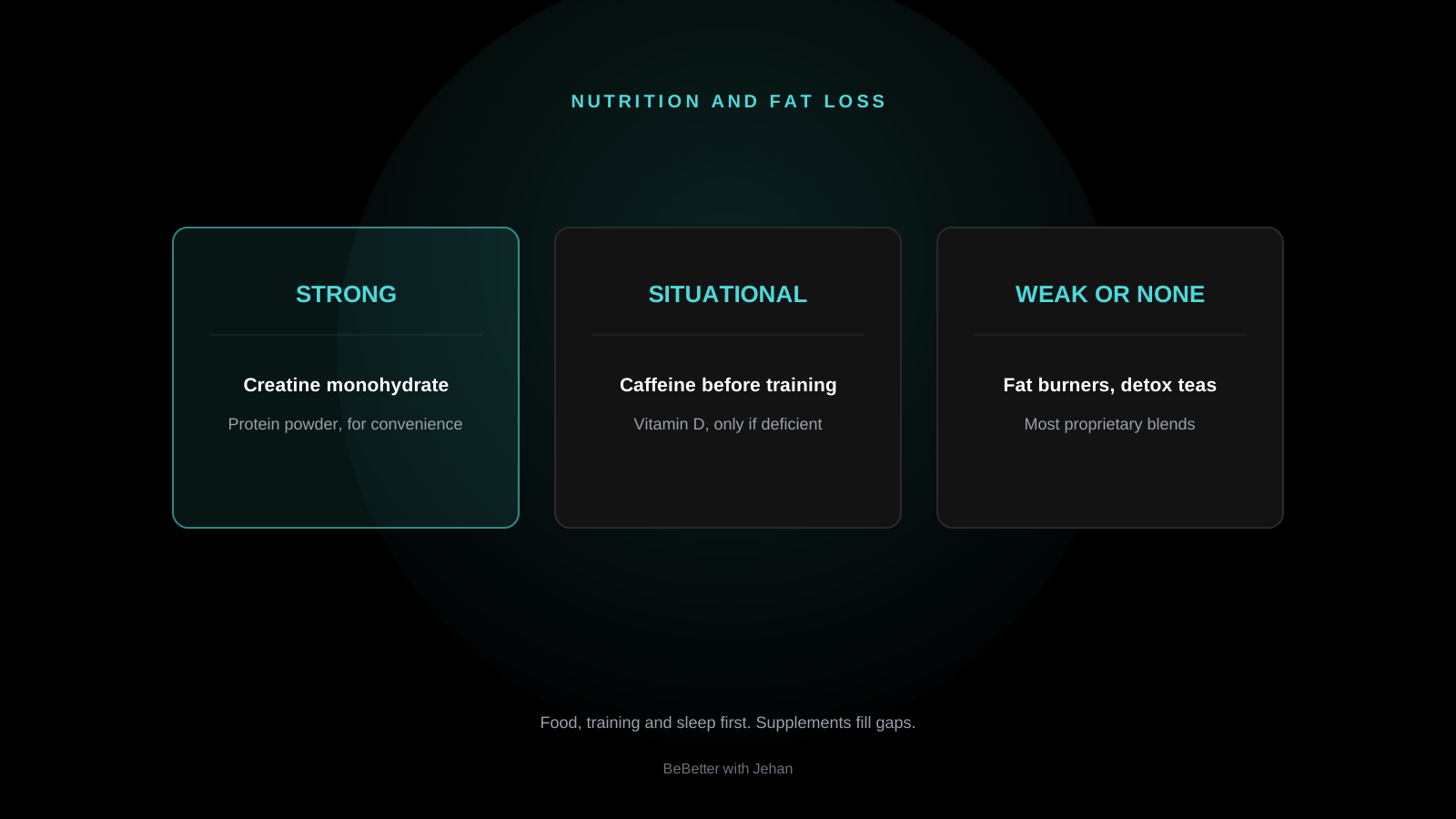
For most people who train, creatine monohydrate is the supplement with the strongest evidence, and protein powder is a convenient way to reach your protein target rather than something you need. Caffeine and vitamin D are situational. Most other products, including fat burners and detox teas, have little meaningful support.
Supplements fill gaps. Training, food and sleep do the work.
- Get training, protein, calories and sleep right first.
- If you take one supplement, make it creatine monohydrate.
- Use protein powder only if food alone leaves a gap.
- Test before taking vitamin D, and ask your doctor.
- Ignore anything promising rapid fat loss.
The three tiers
| Tier | Examples | Verdict |
|---|---|---|
| Strong evidence | Creatine monohydrate | Worth considering for almost anyone who lifts |
| Food in convenient form | Whey or plant protein powder | Useful if you cannot reach your target from food |
| Situational | Caffeine, vitamin D | Depends on your situation, and for vitamin D on a blood test |
| Weak or none | Fat burners, detox teas, most proprietary blends | Not worth your money |
Creatine, the one with real evidence
Creatine is the most researched supplement in sports nutrition, and the evidence is unusually consistent. The International Society of Sports Nutrition position stand reports that creatine supplementation reliably increases the creatine stored in muscle, which helps explain improved high-intensity exercise performance and greater training adaptations (Kreider et al., 2017).
On safety, the same position stand reports that creatine has been shown to be safe and well tolerated in healthy people across a wide range of studies, including doses up to 30 g a day for five years. In practice, a small daily dose of creatine monohydrate, commonly 3 to 5 g, is what most people use. The plain monohydrate form is the one with the evidence behind it, and it is also the cheapest.
Creatine monohydrate is the standard, most studied form of creatine. More expensive variants are marketed as superior, but the research base sits overwhelmingly with plain monohydrate.
Protein powder is food
Protein powder is not a performance enhancer. It is milk or plant protein in a convenient form. Its value is entirely practical: it makes a daily protein target easier to hit, particularly for vegetarians, which is covered in the vegetarian protein guide. If you reach your target from food, you do not need it.
Coach's perspective
The question I get most is which fat burner to take. My answer is always the same: none. Not because I am against supplements, but because they are being asked to do a job that only a calorie deficit can do.
The clients who make the most progress usually take one or two things at most, and have spent their effort on the fundamentals instead. That is not a coincidence.
Situational options
Caffeine can help training performance for some people, and coffee before a session is a perfectly sensible way to use it. Keep it away from the evening, since it can affect sleep, and poor sleep works against you, as covered in sleep and fat loss.
Vitamin D is only worth taking if a blood test shows you are low. Speak to your doctor rather than supplementing on assumption.
What to skip
Fat burners, detox teas, testosterone boosters and most proprietary blends have little meaningful evidence behind them for the claims they make. Some are simply expensive caffeine. If a product promises rapid fat loss, the promise is the warning sign.
- Creatine monohydrate has the strongest evidence of any supplement for people who train.
- Protein powder is convenient food, not a requirement.
- Caffeine and vitamin D are situational, and vitamin D should follow a blood test.
- Fat burners and detox products are not worth your money.
- No supplement replaces training, food and sleep.
Myth versus fact
| Common claim | What the evidence says |
|---|---|
| “Creatine is a steroid.” | It is not. It is a naturally occurring compound found in meat and fish, and one of the most studied supplements available. |
| “You need protein shakes to build muscle.” | Total protein matters, not its source. Shakes are only a convenient way to reach the total. |
| “Fat burners speed up fat loss.” | There is little good evidence of meaningful fat loss from these products. The deficit does the work. |
The mistakes I see most
1. Buying supplements before fixing the basics
The effect of creatine is real but modest. It cannot compensate for inconsistent training or a poor diet.
2. Paying for expensive creatine variants
Plain monohydrate is the form with the evidence, and the cheapest.
3. Supplementing vitamins without testing
More is not better. Test first and follow your doctor's advice.
4. Trusting proprietary blends
Undisclosed doses make it impossible to know what you are actually taking.
Your practical checklist
- Confirm your protein, calories, training and sleep are in place first.
- If you lift, consider 3 to 5 g of creatine monohydrate a day.
- Use protein powder only if food leaves you short of your target.
- Keep caffeine to earlier in the day.
- Get a blood test before taking vitamin D, and speak to your doctor if you have any medical condition.
Research summary
Kreider and colleagues (2017) is the ISSN position stand on creatine. Position stands are reviews of a large evidence base rather than single studies, which is why they carry weight here. Note that the ISSN is an organisation focused on sports nutrition, and its conclusions are most directly applicable to people who train.
Jäger and colleagues (2017) is the ISSN position stand on protein, which supports the view that protein powder is a practical way to meet a protein target rather than a distinct performance aid.
Limitations: this article does not cite trials for caffeine or vitamin D, and makes no specific claims about them beyond general, cautious guidance. Individual response to creatine varies, and anyone with a medical condition should take advice before starting any supplement.
Supplements are one line in a plan, not the plan.
Your Nutrition Plan covers supplements briefly and honestly, inside a full plan built around your own calories, protein and meals. See what your Blueprint could look like in about two minutes.
Start my BlueprintEight quick questions, about 2 minutes, and you see a preview of your own Blueprint before you message me. The Fitness Blueprint is ₹14,999 at present, reduced from a recommended price of ₹24,999. Flexible payment over 3 or 6 months can be arranged. See what is included.
Curious exactly what is included and what it costs? See the full pricing breakdown. Still deciding, or have a specific question first? Get in touch and I will answer honestly.
Frequently asked questions
Is creatine safe?
The ISSN position stand reports that creatine has been shown to be safe and well tolerated in healthy people, including at doses up to 30 g a day for five years. Anyone with kidney disease or another medical condition should check with their doctor first.
Do I need protein powder?
No. It is food in a convenient form. It is useful if you struggle to reach your protein target, particularly on a vegetarian diet, but whole food works just as well.
Do fat burners work?
There is little good evidence that fat-burner products produce meaningful fat loss. A calorie deficit does the work, and no supplement replaces it.
Should I take vitamin D?
Only if a blood test shows you are low, and on the advice of your doctor. Routine supplementation without knowing your levels is not something I recommend as a coach.
References
- Kreider RB, Kalman DS, Antonio J, et al. International Society of Sports Nutrition position stand: safety and efficacy of creatine supplementation in exercise, sport, and medicine. Journal of the International Society of Sports Nutrition. 2017;14:18. PubMed
- Jäger R, Kerksick CM, Campbell BI, et al. International Society of Sports Nutrition Position Stand: protein and exercise. Journal of the International Society of Sports Nutrition. 2017;14:20. PubMed
A note on medical advice. This article is educational and reflects the research as I read it. It is not medical or dietetic advice and it cannot account for your individual circumstances. If you are managing a medical condition, are pregnant, are taking medication affected by diet or activity, or are recovering from injury, please speak to your doctor or a registered dietitian first. If anything here conflicts with advice from your own clinician, follow theirs.
Questions about applying any of this? Message me directly or find me on Instagram. Back to the Knowledge Hub or the homepage. You can also read more about how I coach, see what the Fitness Blueprint costs, or get in touch.