Should you bulk, cut or recomp? How to choose
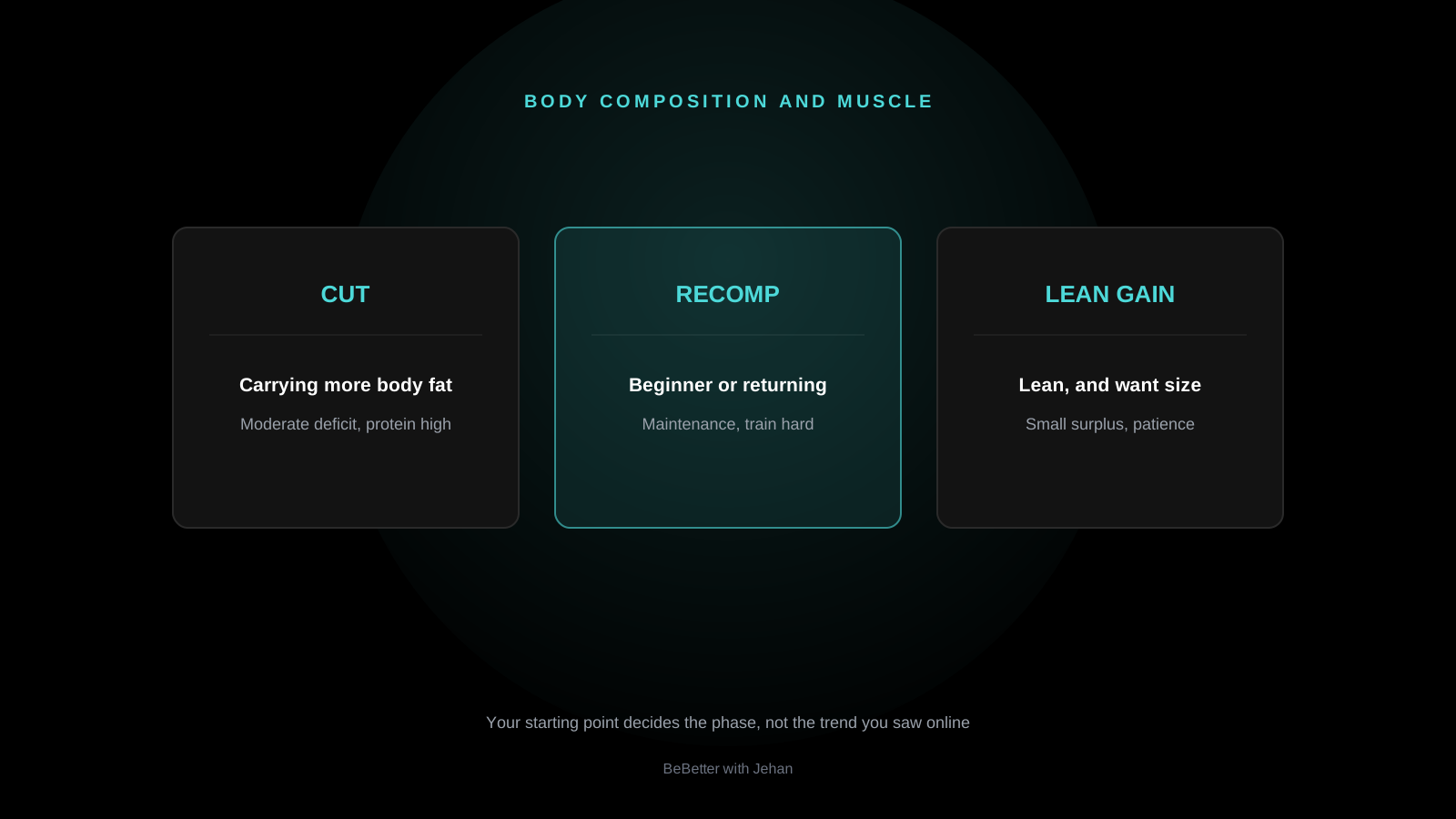
Bulking, cutting and recomposition are presented online as lifestyles. They are tools, and the right one depends almost entirely on where you are starting from.
Your starting point decides it. If you are carrying more body fat, a cut usually makes sense first. If you are new to training or returning after a break, recomposition is often the best option. If you are already lean and want more size, a small calorie surplus works best.
None of these is a lifestyle. Each is a phase with a purpose and an end point.
- Decide based on your starting point, not on what is popular.
- More body fat: cut first.
- New or returning: recomposition.
- Lean and wanting size: a small surplus.
- Whichever you choose, keep protein high and keep training progressively.
How to decide
| Your starting point | Usually best | Calories |
|---|---|---|
| Carrying more body fat | Cut | A moderate deficit |
| New to training | Recomposition | Around maintenance |
| Returning after a break | Recomposition | Around maintenance |
| Lean, want more size | Lean gain | A small surplus |
| Lean, happy with size | Maintenance | Maintenance, keep training |
Recomposition means losing fat and building muscle at the same time, usually at or near maintenance calories. It is most achievable for beginners, people returning after a break and those carrying more body fat.
When a cut makes sense
If your main goal is losing fat and you are carrying more of it, a cut is usually the most direct route. Keep the rate of loss moderate: a study in athletes found slower weight loss of around 0.7 percent of bodyweight per week preserved lean mass and strength better than faster loss (Garthe et al., 2011). Keep protein high: in a randomised trial, higher protein during an energy deficit combined with training produced more lean mass gain and more fat loss than lower protein (Longland et al., 2016). The detail is in how to lose fat without losing muscle.
When recomposition makes sense
A review of body recomposition notes that losing fat and building muscle at the same time is most achievable for people new to training, those returning after a break and those carrying more body fat (Barakat et al., 2020). If that describes you, there is often no need to choose between the two. See body recomposition and what beginners can expect.
When a lean gain makes sense
If you are already lean and want more muscle, a small calorie surplus supports growth while limiting fat gain. The word that matters is small. A large surplus mostly adds fat that you will later need to lose, which is why the old approach of eating everything in sight has largely fallen out of favour.
Coach's perspective
The most common mistake I see is someone carrying extra body fat starting a bulk because they watched a video aimed at lean twenty-year-olds. Six months later they are bigger, softer and frustrated.
My default for most working professionals who come to me is recomposition or a moderate cut, because that matches where they are actually starting. The phase follows the person, not the trend.
- Choose the phase based on your starting point.
- Carrying more body fat usually means cutting first.
- Beginners and returners are often best suited to recomposition.
- Lean people wanting size do best with a small surplus.
- Keep protein high and keep training progressively in every phase.
Myth versus fact
| Common claim | What the evidence says |
|---|---|
| “You have to bulk to build muscle.” | Beginners, returners and those with more body fat can often build muscle while losing fat. |
| “A bigger surplus builds muscle faster.” | Beyond a small surplus, the extra mostly becomes fat. |
| “Cut as fast as possible to get it over with.” | Slower loss preserved lean mass and strength better in research on athletes. |
The mistakes I see most
1. Choosing a phase based on trends
The right phase depends on your starting point, not on what is popular online.
2. Bulking while carrying more body fat
This usually adds fat you will later need to lose.
3. Never ending the phase
Each phase should have a goal and a review point.
4. Cutting protein during a cut
Requirements rise in a deficit. Protein protects muscle when energy is scarce.
Your practical checklist
- Assess honestly where you are starting from.
- Choose the phase that matches it from the table above.
- Set protein high whichever phase you choose.
- Keep training progressively throughout.
- Set a review point, such as twelve weeks, before changing phase.
Research summary
Barakat and colleagues (2020) is a narrative review of recomposition. Garthe and colleagues (2011) studied elite athletes, so its precise rate figures apply most directly to trained people. Longland and colleagues (2016) is a randomised trial supporting higher protein in a deficit, using a large deficit and supervised training.
What is interpretation here: the decision table is coaching judgement built on these findings, not a tested protocol. Individual goals, health and preferences should shape the final choice.
The right phase, chosen for where you are.
Your Blueprint sets your goal direction from your full assessment, whether that is fat loss, recomposition or muscle gain, and builds calories, protein and training around it. Answer a few quick questions to see which direction your plan would take.
Start my BlueprintEight quick questions, about 2 minutes, and you see a preview of your own Blueprint before you message me. The Fitness Blueprint is ₹14,999 at present, reduced from a recommended price of ₹24,999. Flexible payment over 3 or 6 months can be arranged. See what is included.
Curious exactly what is included and what it costs? See the full pricing breakdown. Still deciding, or have a specific question first? Get in touch and I will answer honestly.
Frequently asked questions
Should I bulk or cut first?
If you are carrying more body fat, a cut usually makes sense first. If you are lean and want more size, a small surplus. If you are new or returning, recomposition is often the better starting point.
What is a lean bulk?
A small calorie surplus that supports muscle gain while limiting fat gain, rather than eating as much as possible.
Can I recomp if I have been training for years?
It is harder. Recomposition works best for beginners, returners and those with more body fat. Experienced, lean lifters often progress better with distinct phases.
How fast should I lose weight on a cut?
Roughly 0.5 to 1 percent of bodyweight per week tends to protect muscle better than faster loss.
References
- Barakat C, Pearson J, Escalante G, Campbell B, De Souza EO. Body Recomposition: Can Trained Individuals Build Muscle and Lose Fat at the Same Time? Strength and Conditioning Journal. 2020;42(5):7-21. Journal
- Garthe I, Raastad T, Refsnes PE, Koivisto A, Sundgot-Borgen J. Effect of two different weight-loss rates on body composition and strength and power-related performance in elite athletes. International Journal of Sport Nutrition and Exercise Metabolism. 2011;21(2):97-104. PubMed
- Longland TM, Oikawa SY, Mitchell CJ, Devries MC, Phillips SM. Higher compared with lower dietary protein during an energy deficit combined with intense exercise promotes greater lean mass gain and fat mass loss: a randomized trial. American Journal of Clinical Nutrition. 2016;103(3):738-746. PubMed
A note on medical advice. This article is educational and reflects the research as I read it. It is not medical or dietetic advice and it cannot account for your individual circumstances. If you are managing a medical condition, are pregnant, are taking medication affected by diet or activity, or are recovering from injury, please speak to your doctor or a registered dietitian first. If anything here conflicts with advice from your own clinician, follow theirs.
Questions about applying any of this? Message me directly or find me on Instagram. Back to the Knowledge Hub or the homepage. You can also read more about how I coach, see what the Fitness Blueprint costs, or get in touch.