How much water should you drink a day?
Eight glasses a day is one of the most repeated health rules there is. The official reference values are more useful, and more forgiving, than the rule.
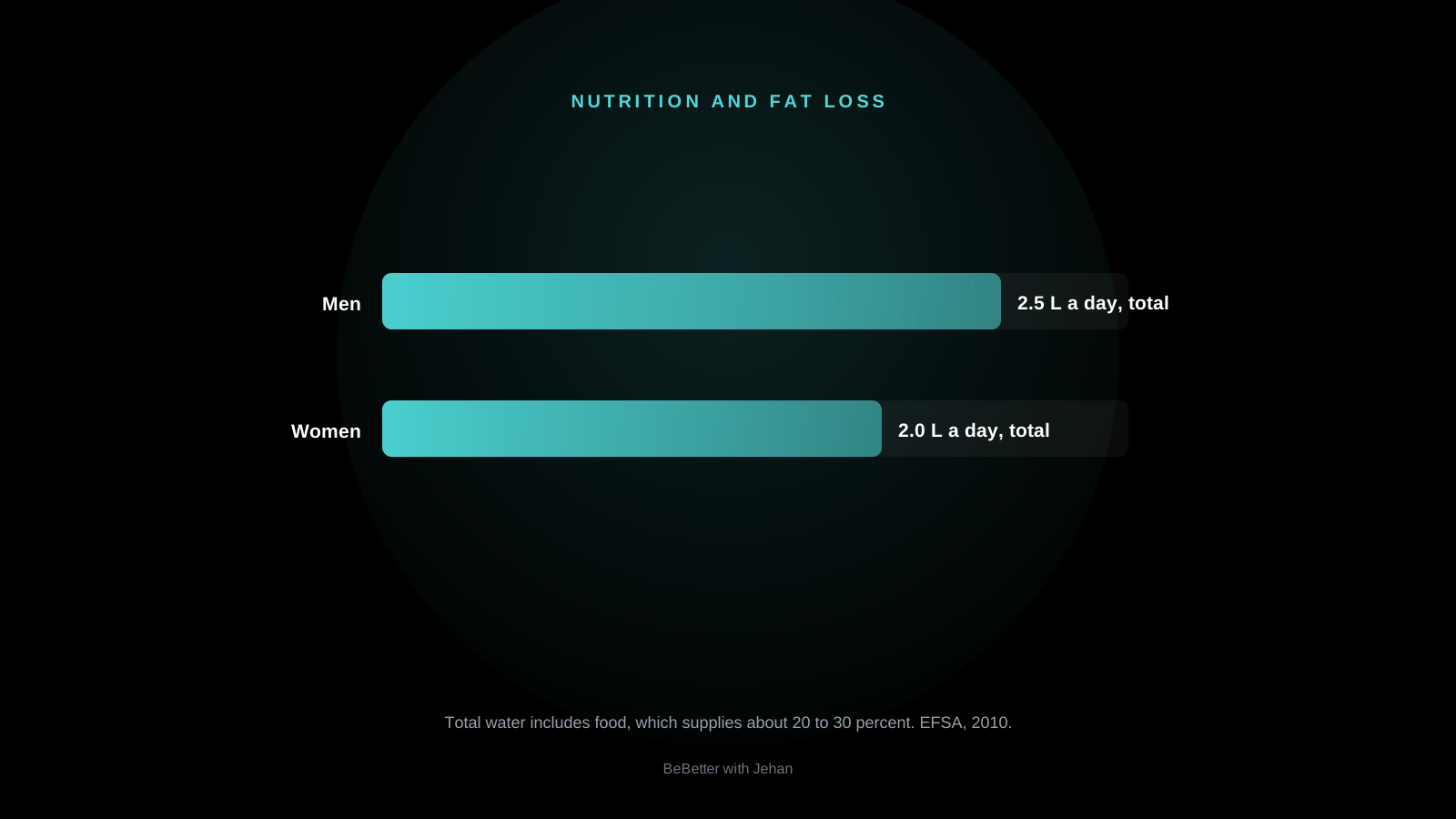
The European Food Safety Authority sets adequate total water intakes of 2.5 litres a day for men and 2.0 litres a day for women. These figures include water from food, which typically supplies 20 to 30 percent, and apply to moderate temperatures and activity levels.
In hot weather or on training days, you need more.
- Men: about 2.5 litres total water a day. Women: about 2.0 litres.
- Food provides roughly a fifth to a third of that.
- Heat and exercise raise your needs.
- Carry a bottle so drinking is easy during long workdays.
- Water supports training and appetite but does not burn fat.
The reference values
| Group | Adequate total water intake |
|---|---|
| Men | 2.5 litres a day |
| Women | 2.0 litres a day |
| Pregnant women | About 300 ml a day more than non-pregnant women |
| Breastfeeding women | About 700 ml a day more than non-breastfeeding women |
These come from the EFSA scientific opinion on water, which states that the values include water from drinking water, all beverages and food moisture, and apply under moderate environmental temperatures and moderate physical activity (EFSA, 2010).
Total water intake includes water from drinks of every kind and from the moisture in food, not only plain drinking water.
Why food counts
Because food usually provides 20 to 30 percent of total water, the amount you need to drink is lower than the headline figure. Tea, milk, buttermilk and other drinks also count. That is why rigid glass-counting is unnecessary for most people.
Heat, exercise and an Indian summer
The reference values assume moderate temperatures. Much of India is far from moderate for several months of the year, and sweating during a commute or a training session raises your needs considerably. On hot days and training days, drink more than the baseline and drink before you feel very thirsty. Sleep and recovery also matter here, as covered in sleep and fat loss.
How to tell if you are drinking enough
- Pale yellow urine is generally a sign of adequate hydration.
- Frequent thirst, headaches or dark urine suggest you need more.
- If you train in heat, drink during the session as well as afterwards.
Coach's perspective
The clients who struggle most with hydration are not lazy about it. They are in meetings all day and simply forget.
The fix is environmental, not motivational: a bottle on the desk, refilled at fixed points in the day.
- Adequate total water intake is about 2.5 litres a day for men and 2.0 litres for women.
- Food supplies around 20 to 30 percent of that.
- Heat and exercise raise your needs.
- Pale yellow urine is a practical guide.
- Water supports training and appetite but does not burn fat.
Myth versus fact
| Common claim | What the evidence says |
|---|---|
| “You must drink eight glasses of plain water.” | Reference values cover total water, including other drinks and food. |
| “Tea and coffee do not count.” | They contribute to total water intake. |
| “Drinking more water burns fat.” | A calorie deficit drives fat loss. Water does not burn fat. |
The mistakes I see most
1. Forgetting to drink during long workdays
A visible bottle makes drinking automatic.
2. Ignoring heat and training
The baseline values assume moderate conditions.
3. Forcing excessive amounts
More is not always better. Drink to your needs.
4. Using sugary drinks for hydration
They add calories that can undo a deficit.
Your practical checklist
- Keep a refillable bottle at your desk.
- Refill it at set points in the day.
- Drink more on hot days and training days.
- Check your urine colour as a simple guide.
- Choose water or unsweetened drinks most of the time.
Research summary
EFSA (2010) is the European Food Safety Authority's scientific opinion on dietary reference values for water. It sets adequate intakes based on observed intakes and other evidence, rather than a single trial.
Limitations: the values are population references for moderate conditions. People with kidney, heart or other medical conditions may need different advice from their doctor.
Hydration goals built into your plan.
Your Nutrition Plan includes hydration goals alongside your meals, set around your routine and training. Send me a message and I will walk you through the next steps.
Start my BlueprintOpens WhatsApp with a short message ready to send. Prefer to share your details directly? Complete the client intake form.
The Fitness Blueprint is ₹14,999 at present, reduced from a recommended price of ₹24,999. Flexible payment over 3 or 6 months can be arranged. See what is included.
Curious exactly what is included and what it costs? See the full pricing breakdown. Still deciding, or have a specific question first? Get in touch and I will answer honestly.
Frequently asked questions
How much water should I drink a day?
EFSA sets adequate total water intakes of 2.5 litres a day for men and 2.0 litres for women. This includes water from food, so the amount you drink is usually lower.
Does food count towards water intake?
Yes. Food typically provides about 20 to 30 percent of total water intake.
Do I need more water in hot weather?
Yes. The reference values apply to moderate temperatures and activity. Heat and exercise increase your needs.
Does drinking more water help weight loss?
Water itself does not burn fat. Staying hydrated can help with appetite and training, but a calorie deficit drives fat loss.
References
- EFSA Panel on Dietetic Products, Nutrition, and Allergies. Scientific Opinion on Dietary Reference Values for water. EFSA Journal. 2010;8(3):1459. Journal
A note on medical advice. This article is educational and reflects the research as I read it. It is not medical or dietetic advice and it cannot account for your individual circumstances. If you are managing a medical condition, are pregnant, are taking medication affected by diet or activity, or are recovering from injury, please speak to your doctor or a registered dietitian first. If anything here conflicts with advice from your own clinician, follow theirs.
Questions about applying any of this? Message me directly or find me on Instagram. Back to the Knowledge Hub or the homepage. You can also read more about how I coach, see what the Fitness Blueprint costs, or get in touch.